
Diamond core drilling · Essex & London
Wall Core Drilling
Clean, round holes through brick, block and concrete walls for extractor fans, boiler flues, soil pipes and service runs. Straight through, or at an angle where the pipe needs a fall.
What it is
A clean, round hole through the wall
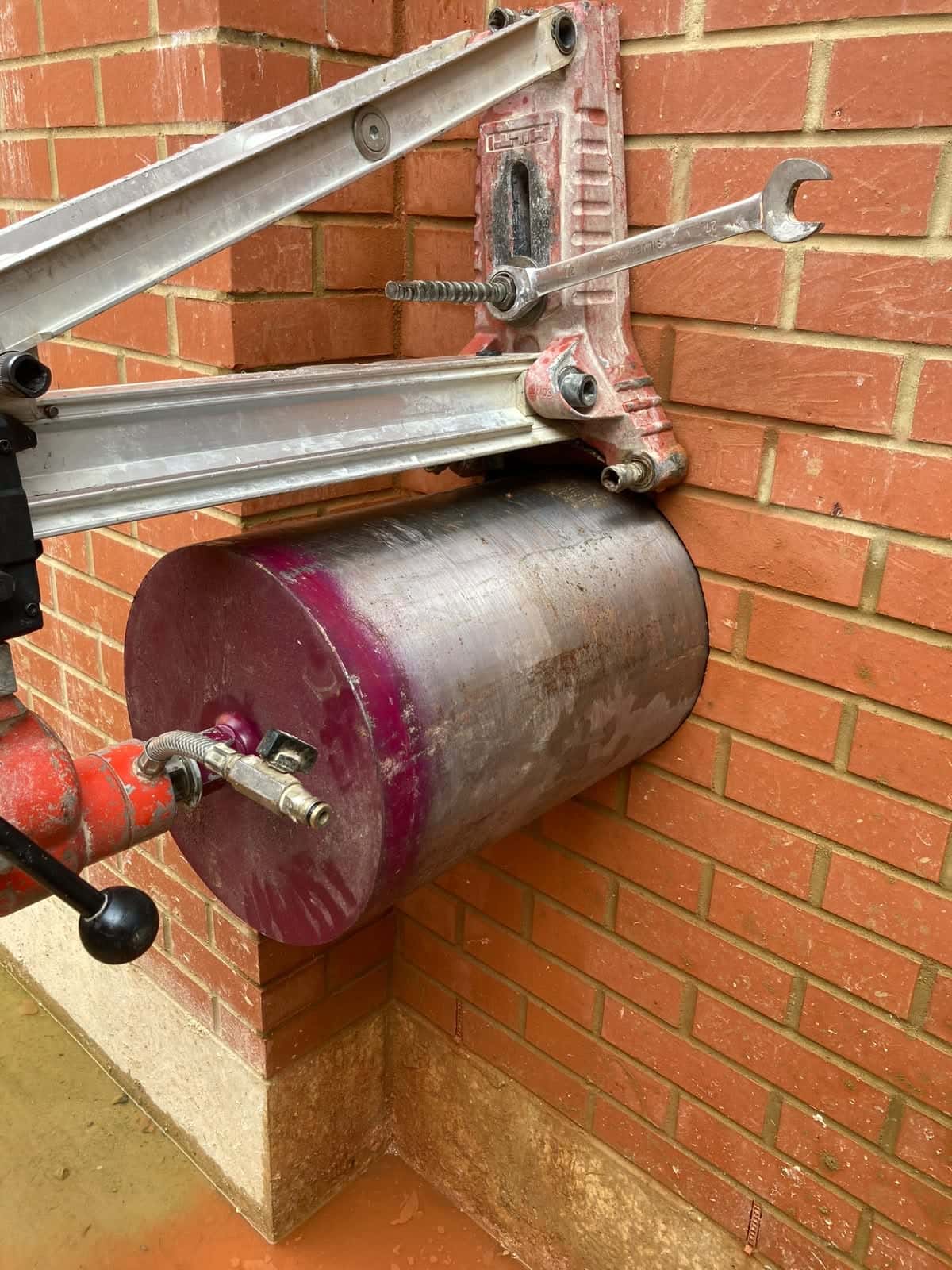
Diamond core drilling uses a hollow, diamond-tipped bit that grinds a ring through the wall. The material inside the ring, called the core, comes out as a solid plug. What’s left is a neat, round hole with smooth sides, cut to the size you need, instead of a hole hammered through and patched up afterwards.
For wall work the drill motor runs on a rig: a stand held firmly against the wall or floor so the bit stays steady and square from start to finish. That’s what keeps the hole straight and the edges tidy on both faces, even through thick masonry.
When you need it
You need a cored hole when something has to pass through a wall and the hole has to be the right size in the right place: a duct for an extractor fan, a boiler flue, a soil or waste pipe, a condensate line or a run of cables. It’s also the answer when the wall is too thick or too hard for a hand-held drill, or when the finish on either side matters.
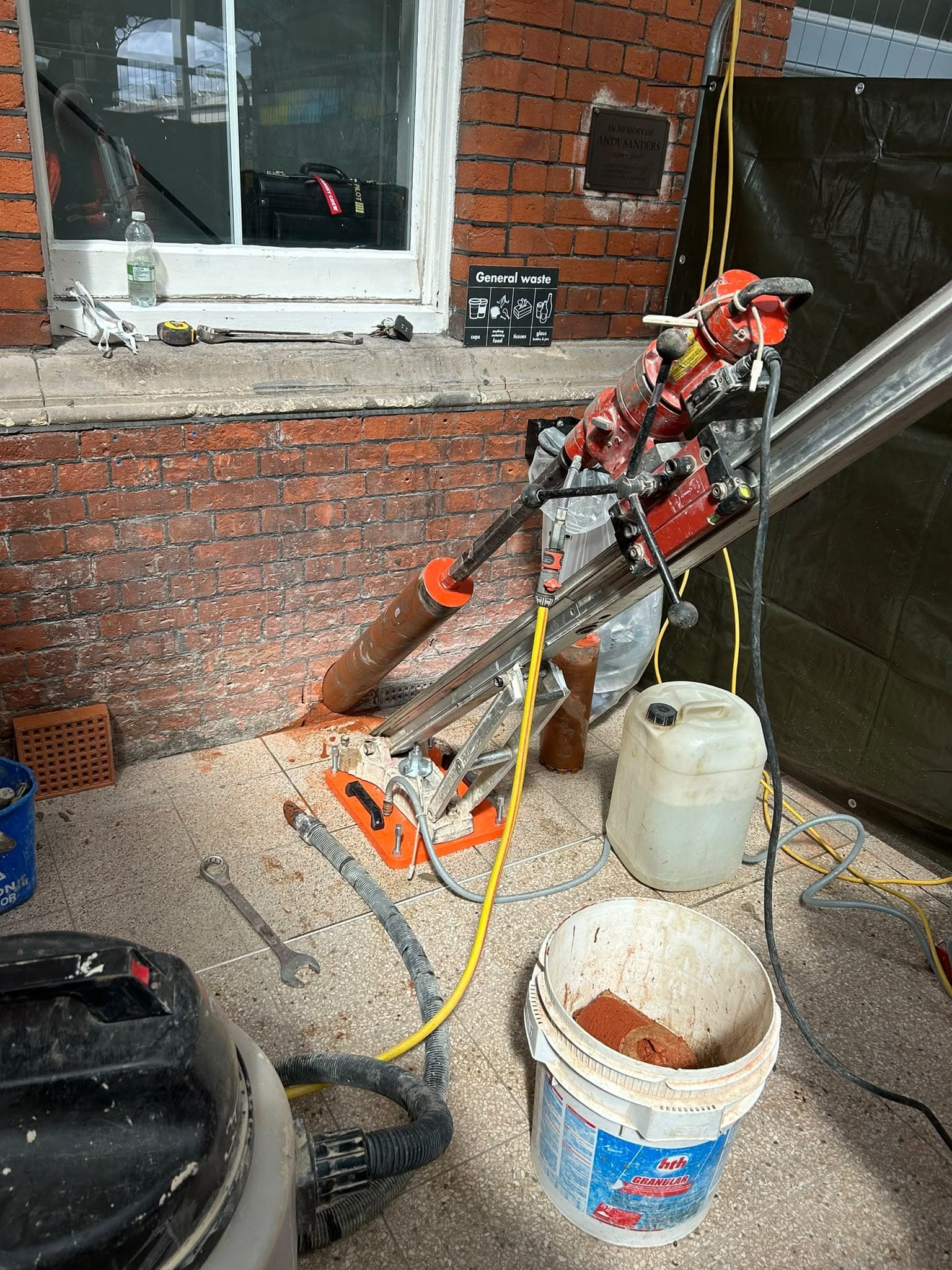
Some holes need to go through at an angle, so a pipe falls towards a drain or a flue clears an obstruction. The rig can be set to drill at an angle, and our photos include angled cores through a brick wall at floor level, drilled from a rig on a vacuum base on a tiled floor.
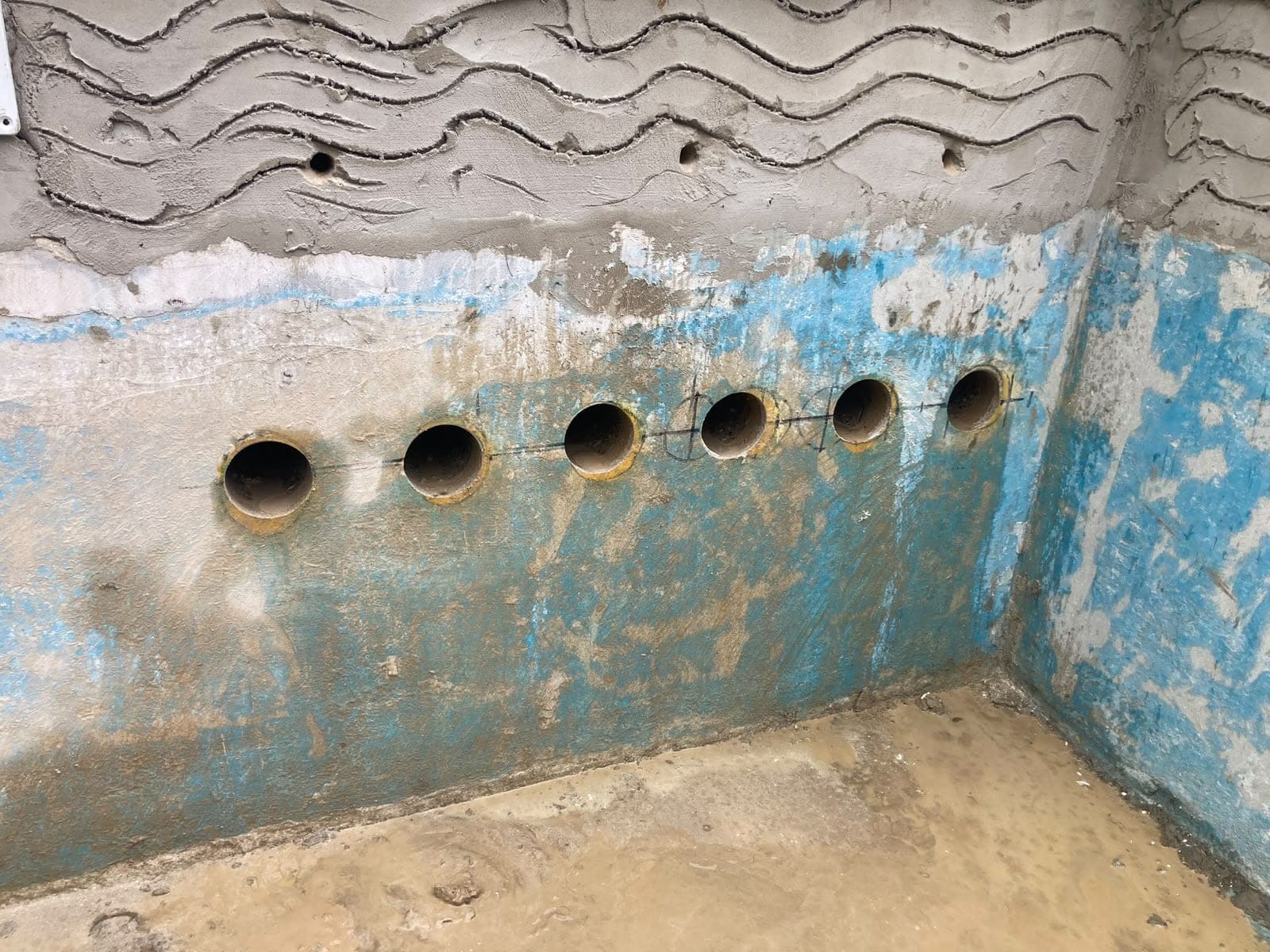
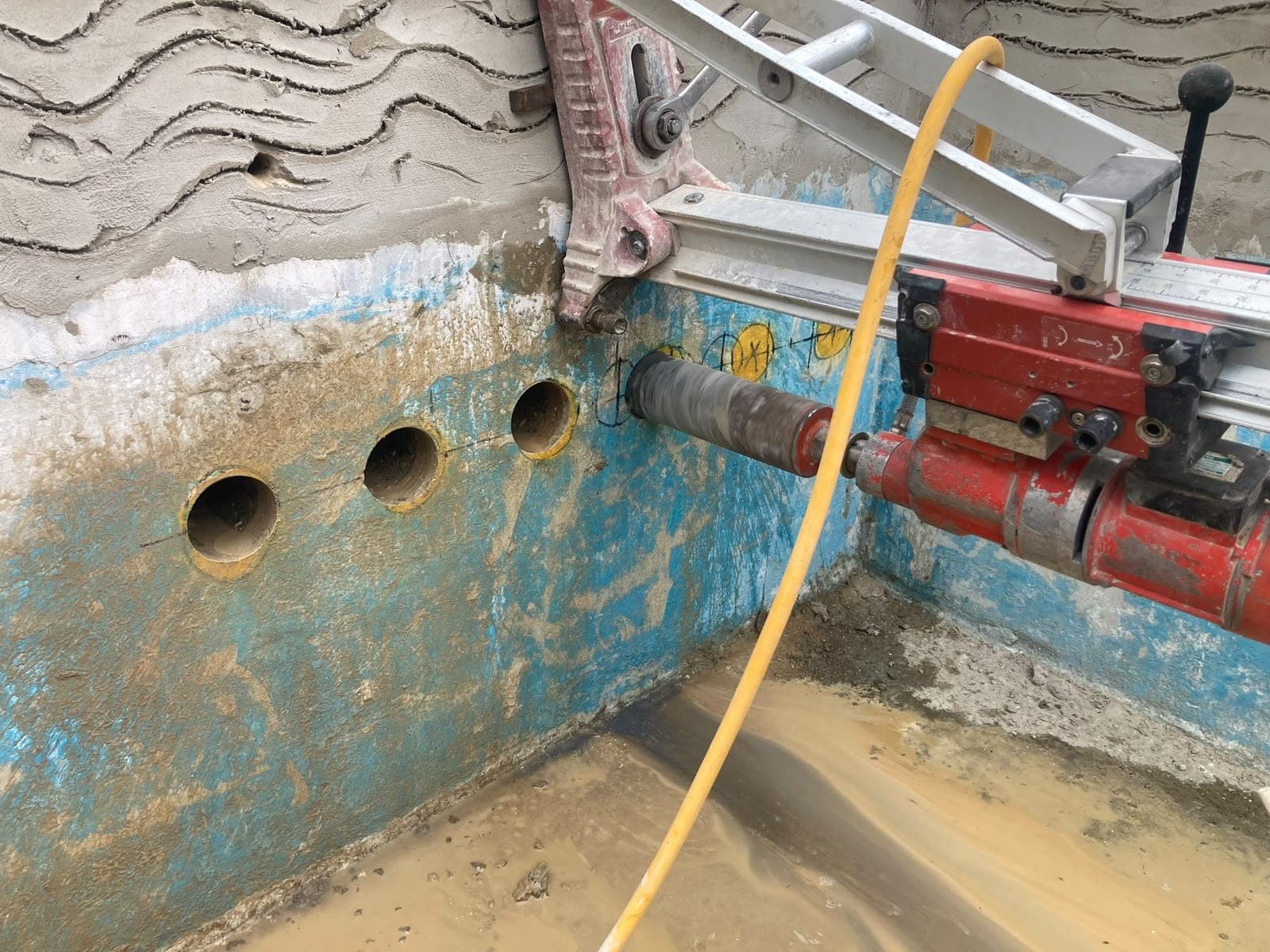
Where several holes are needed in a line, such as service penetrations at low level, the rig is moved along and set up again for each core so the spacing stays even. One of our jobs shows a row of evenly spaced cores through a concrete wall.
Applications & materials
What wall cores are for
Typical applications
- Extractor fans and kitchen or bathroom ventilation
- Boiler flues
- Soil and waste pipes
- HVAC pipework and condensate lines
- Cable routes and ducts
- Sprinkler and fire service pipes
- Drainage connections through low-level walls
Materials
- Brick, including cavity walls
- Concrete block
- Concrete, including reinforced concrete walls
How we do it
Accurate, and tidy as we go
Diamond core drilling is usually done wet. Water runs through the bit to cool the diamonds and carry away the ground-up material, which comes out as a grey slurry rather than as a cloud of dust. Controlling that water is a big part of doing the job tidily.
You can see how it’s handled in our photos: a collector where the bit meets the wall to catch the water and slurry, a wet vac to pick it up, and the cores dropped into buckets so they don’t end up across the floor.
Before drilling, the position is marked out and the rig is set up square to the wall, or at the agreed angle. The bit then cuts steadily through. On a thick wall the core may come out in more than one piece.
Through an outside wall, think about the far side too. The core can drop out of the outside face when the bit breaks through, so the area outside needs to be clear.
Before we price it
What we need from you
The more we know up front, the more accurate the price. Send what you have through the quote form, or call us.
- Photos of both sides of the wall, with the spot marked if you can
- The size of hole, or what’s going through it (duct, flue or pipe size)
- How thick the wall is and what it’s made of, if you know
- Whether the hole goes straight through or at an angle, and which way any fall should run
- Access: which floor, how far from parking, and whether the area is clear
- Whether there’s power and water near the work area
- Anything known to run through or near the wall, such as pipes or cables
Good to know
Questions people ask
Will it make much dust?
Diamond core drilling is usually done wet, which keeps dust down. The water turns the drilled material into slurry, so that’s what needs collecting, which is why you’ll see collectors and wet vacs in our photos.
Can you drill at an angle?
Yes. The rig can be set at an angle for pipes that need a fall or flues that need to clear something. Our photos include angled cores through brick at floor level.
What happens to the core?
The core is the solid plug of wall that comes out of the bit, usually in one piece, or a few on a thick wall. In our photos they’re collected in buckets as the drilling goes.
Other services
More of what we drill
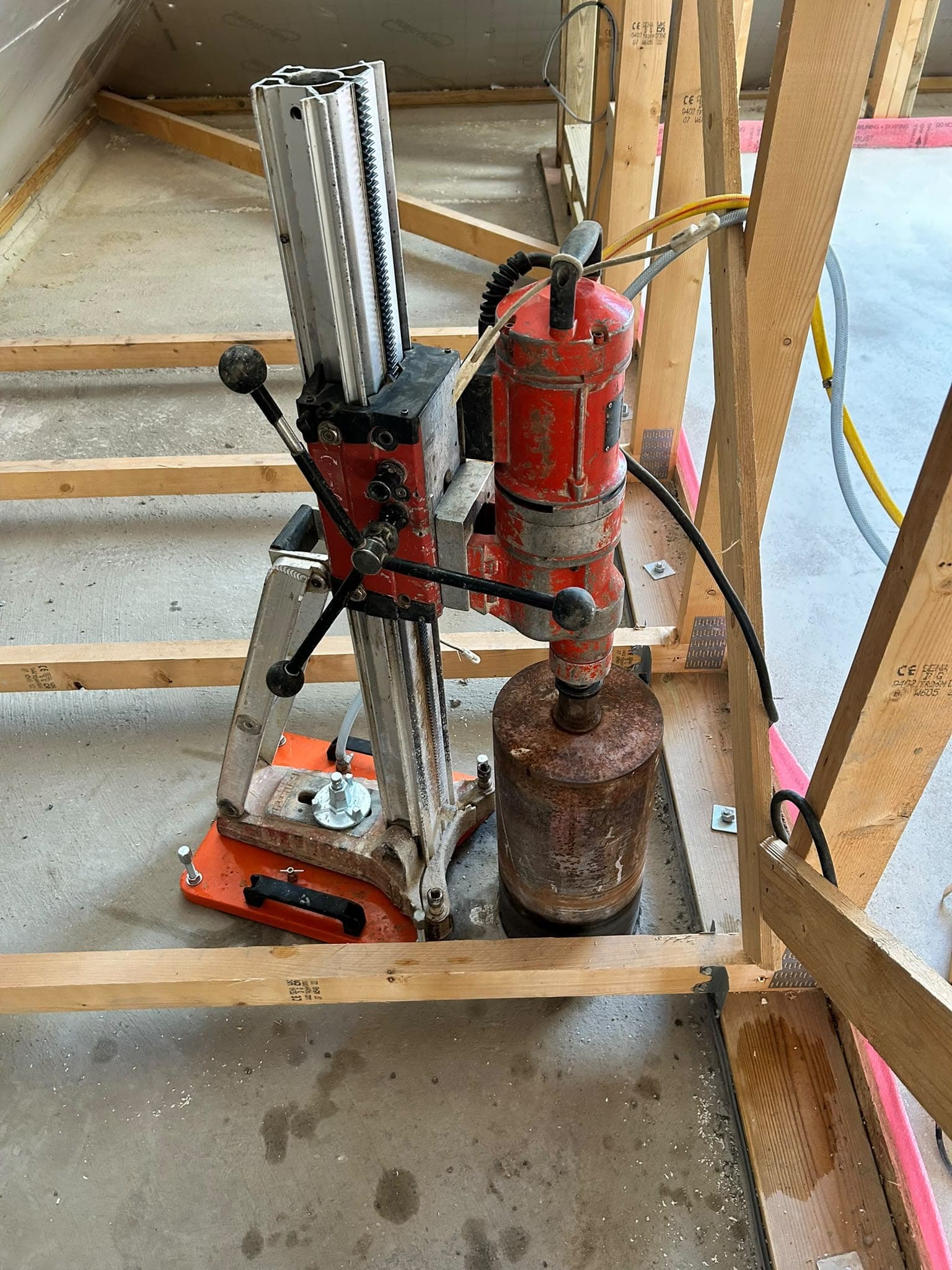
Floor & slab core drilling
Vertical cores through floors and slabs for pipes, risers and services.
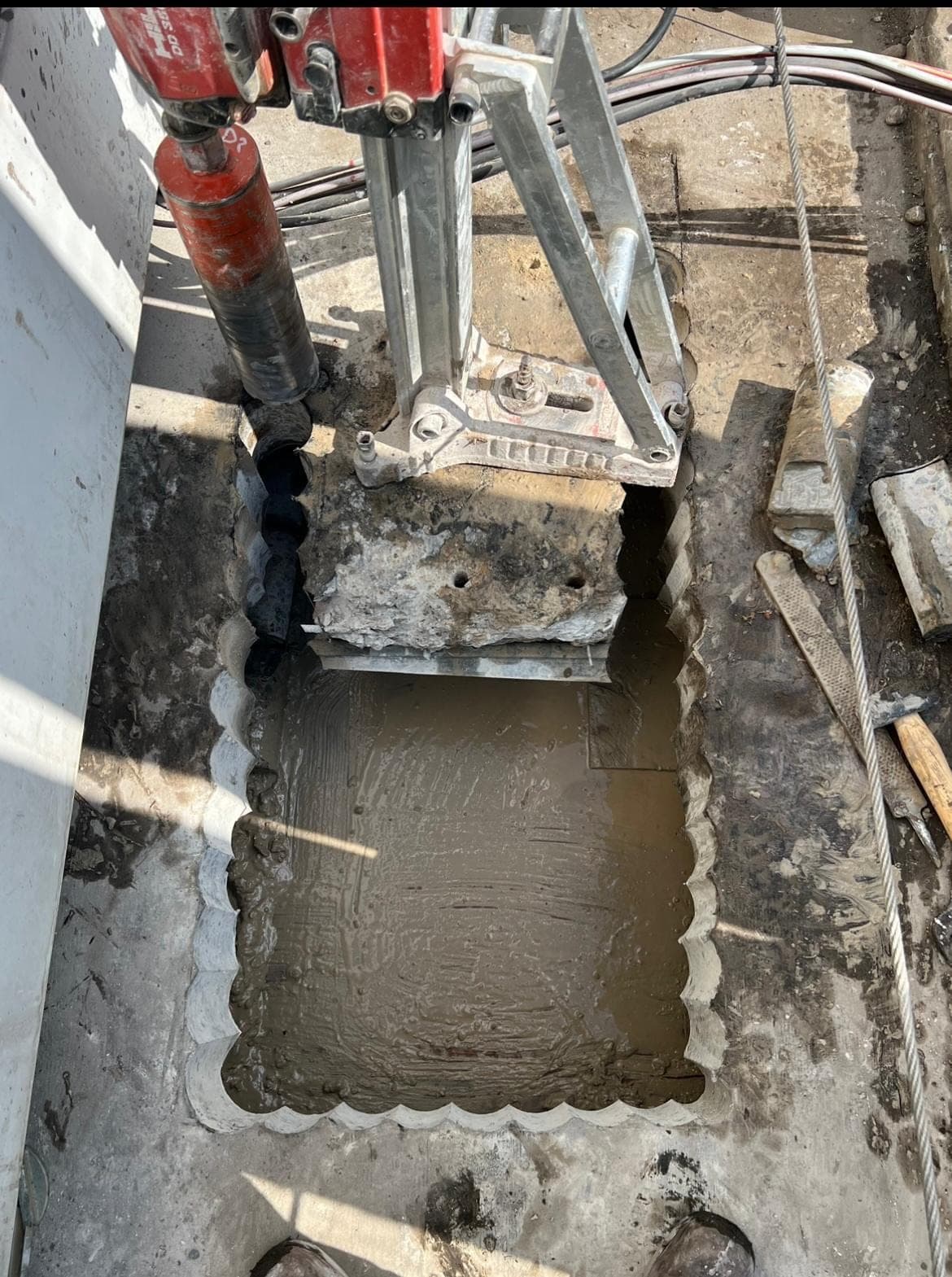
Openings by stitch drilling
Square and rectangular openings formed from a line of overlapping cores.
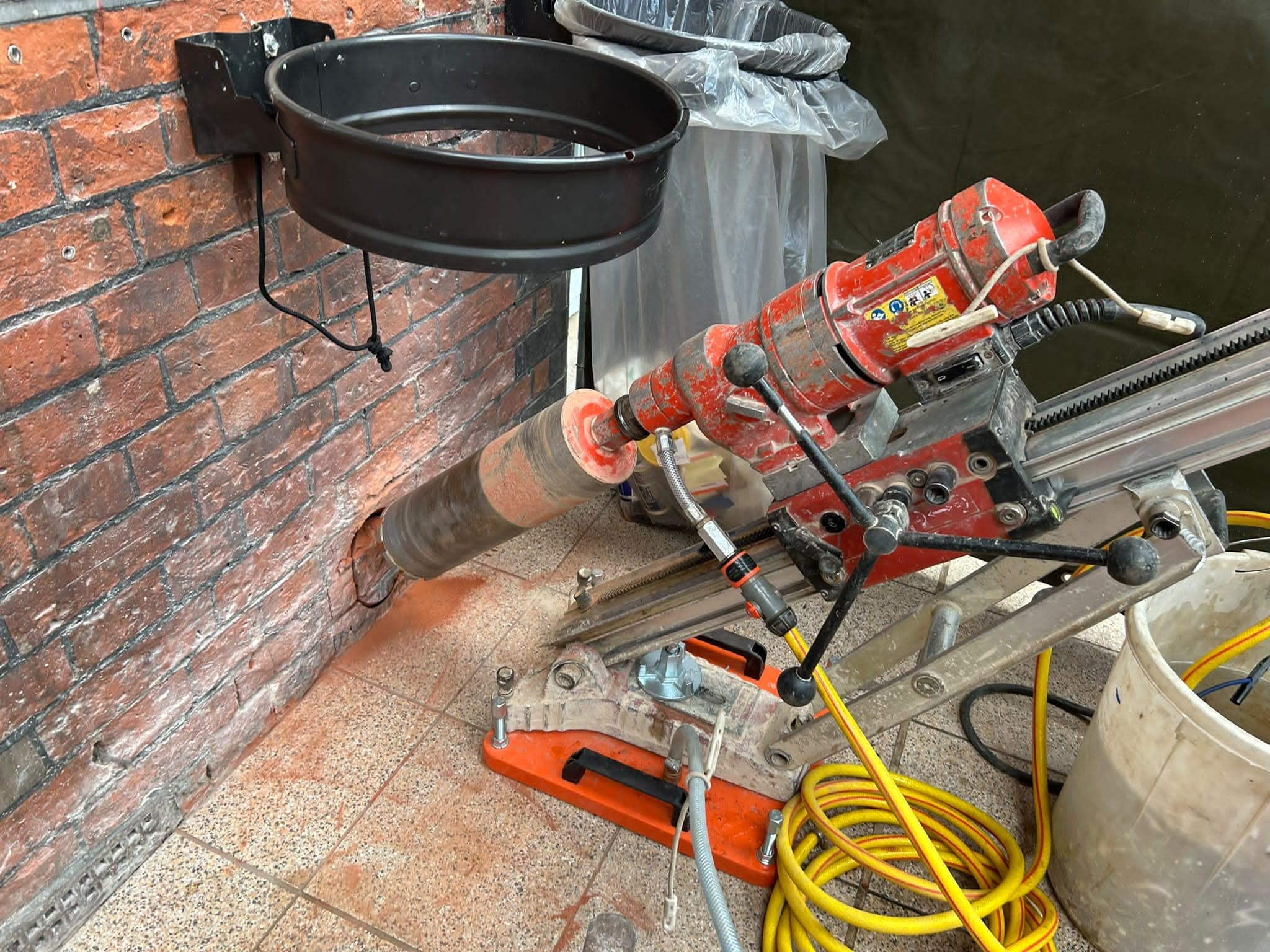
Vacuum-base drilling
Rigs held down by suction, so there are no fixings into finished floors.
Need a hole through a wall?
Send us a photo of the wall and tell us what’s going through it. We’ll come back to you with a price.