Diamond core drilling · Essex & London
Openings by Stitch Drilling
Square and rectangular openings through concrete slabs, floors and walls, formed from a line of overlapping cores. For risers, hatches, ductwork and new service routes.
What it is
Forming openings in concrete, one core at a time
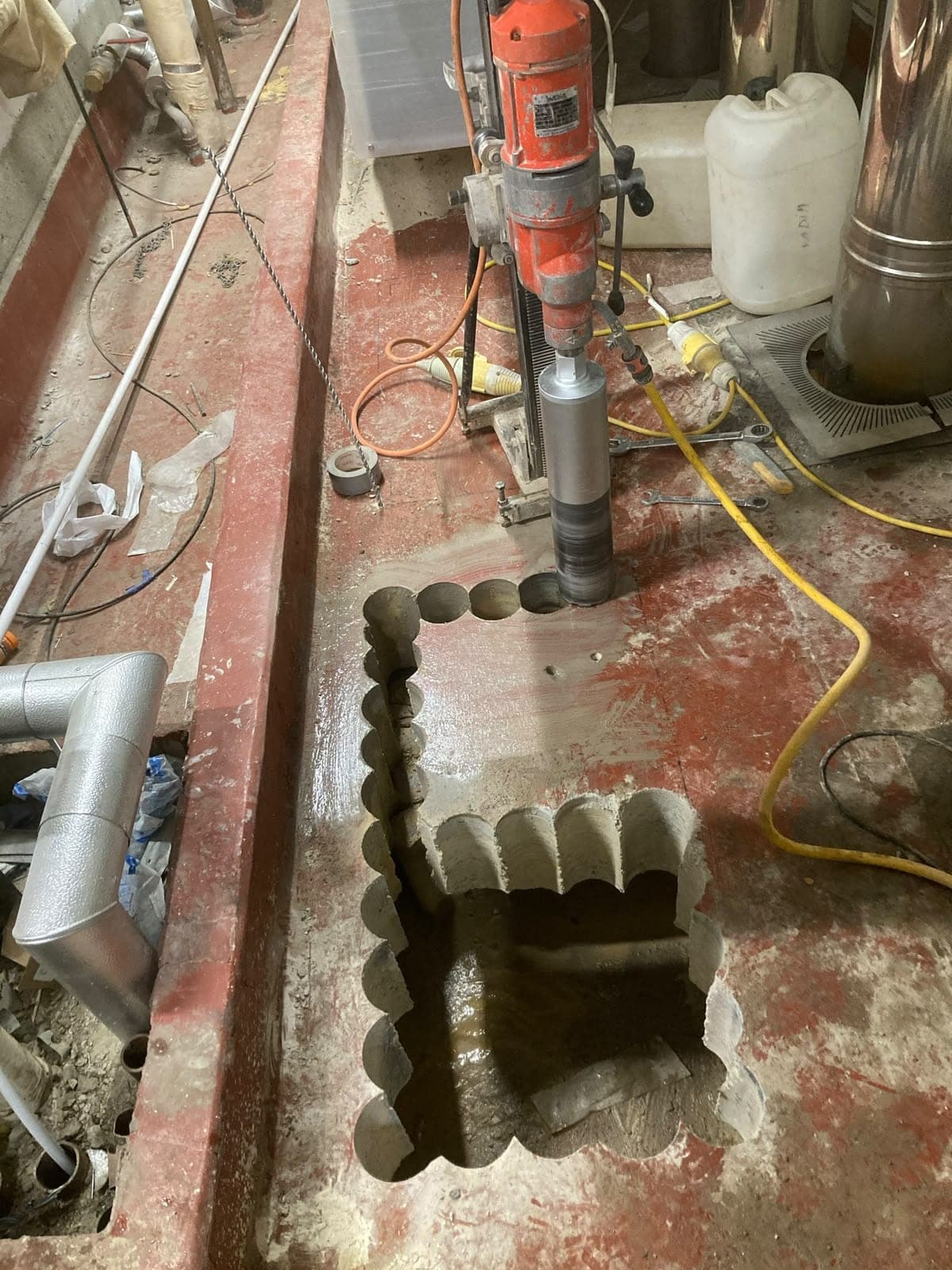
Stitch drilling is a way of forming an opening bigger than any single core bit: you drill a line of overlapping cores around the outline until the middle is cut free. The name comes from the row of cores, which looks like a line of stitches.
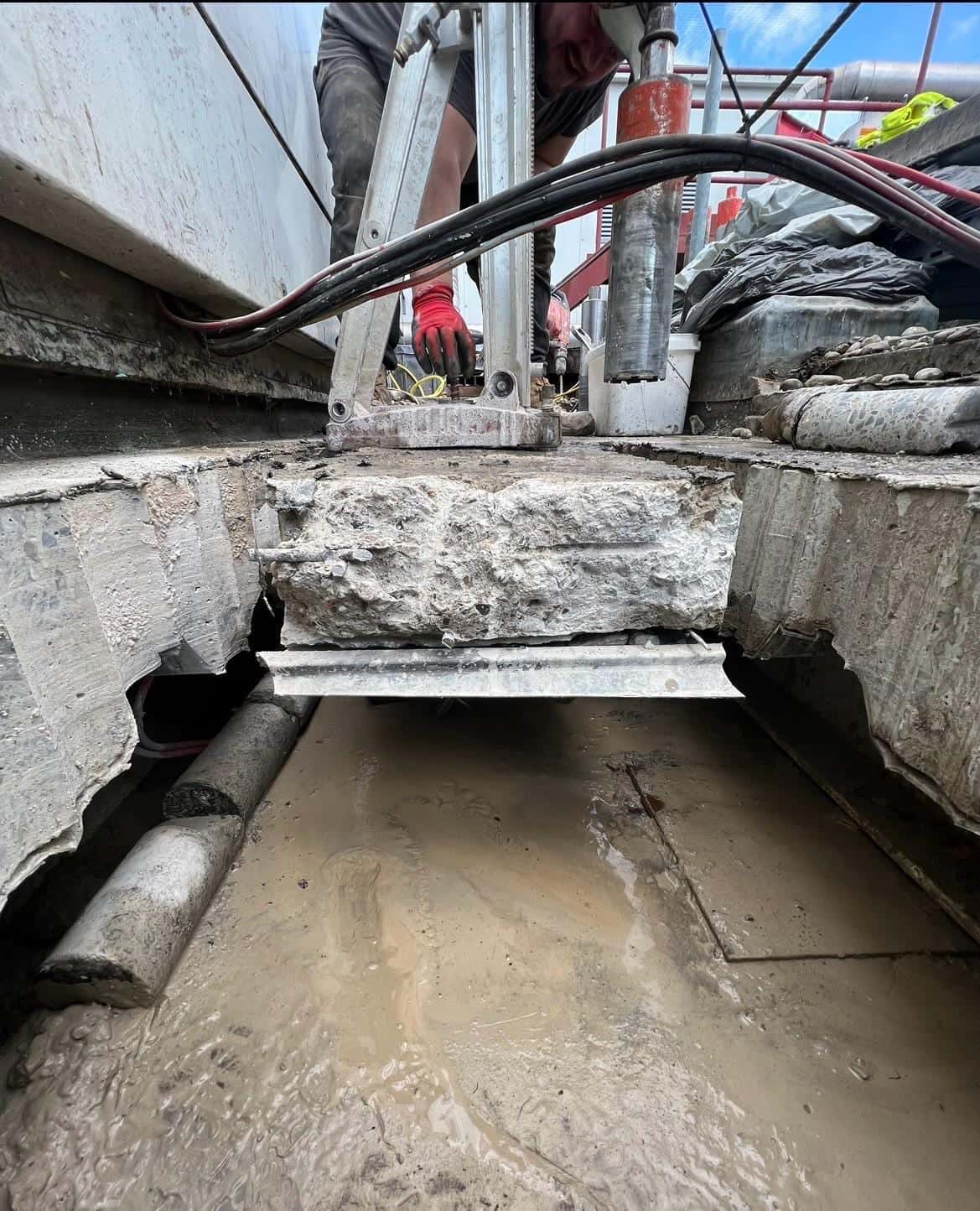
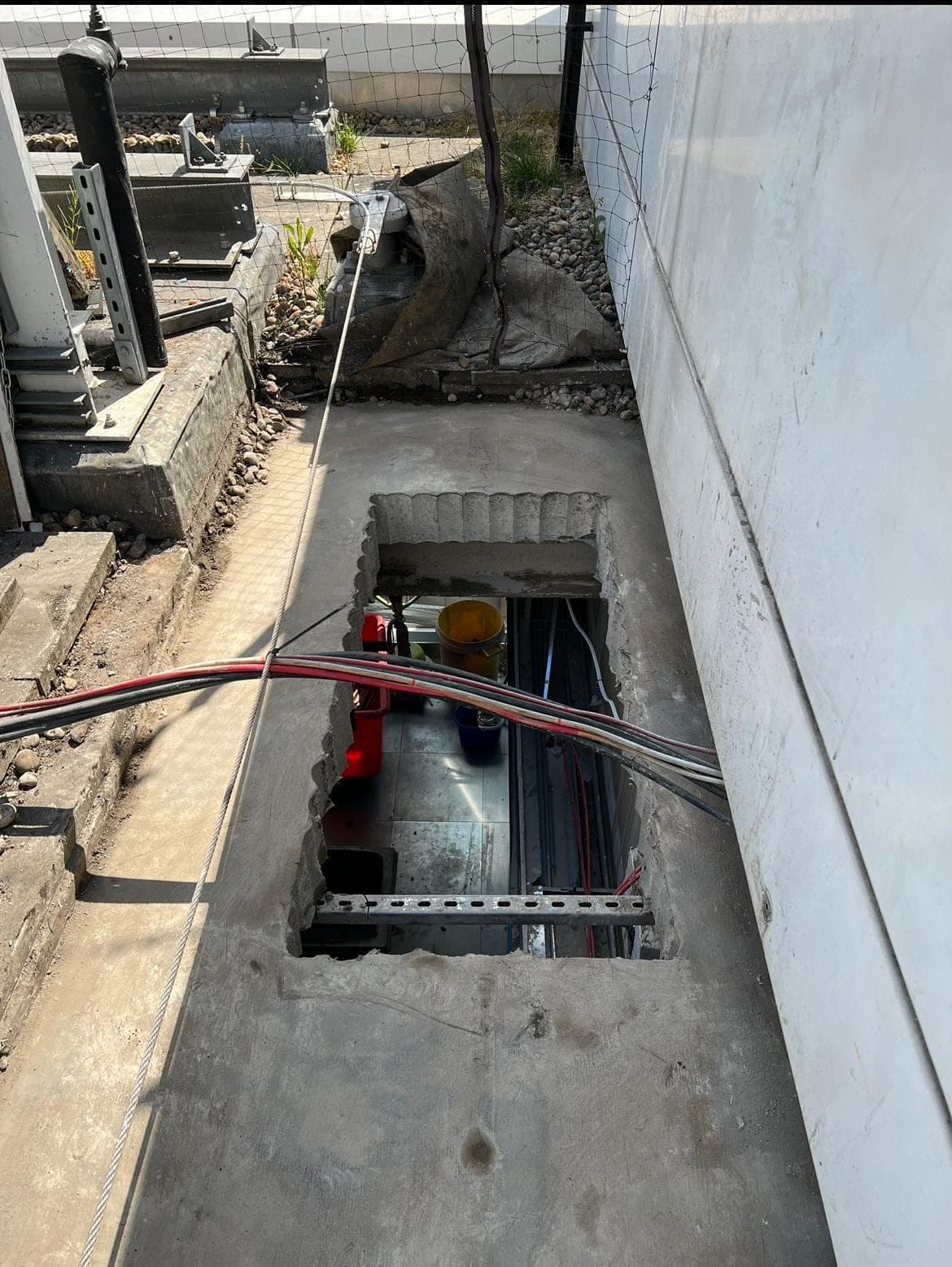
Once the outline is complete, the section inside can come out. Depending on its size, its weight and what’s below, it might be lifted out in one piece or broken into smaller pieces and removed. The photos from one of our roof-slab jobs show both: a cut section being lifted clear of the slab, and a hand breaker being used inside one of the openings.
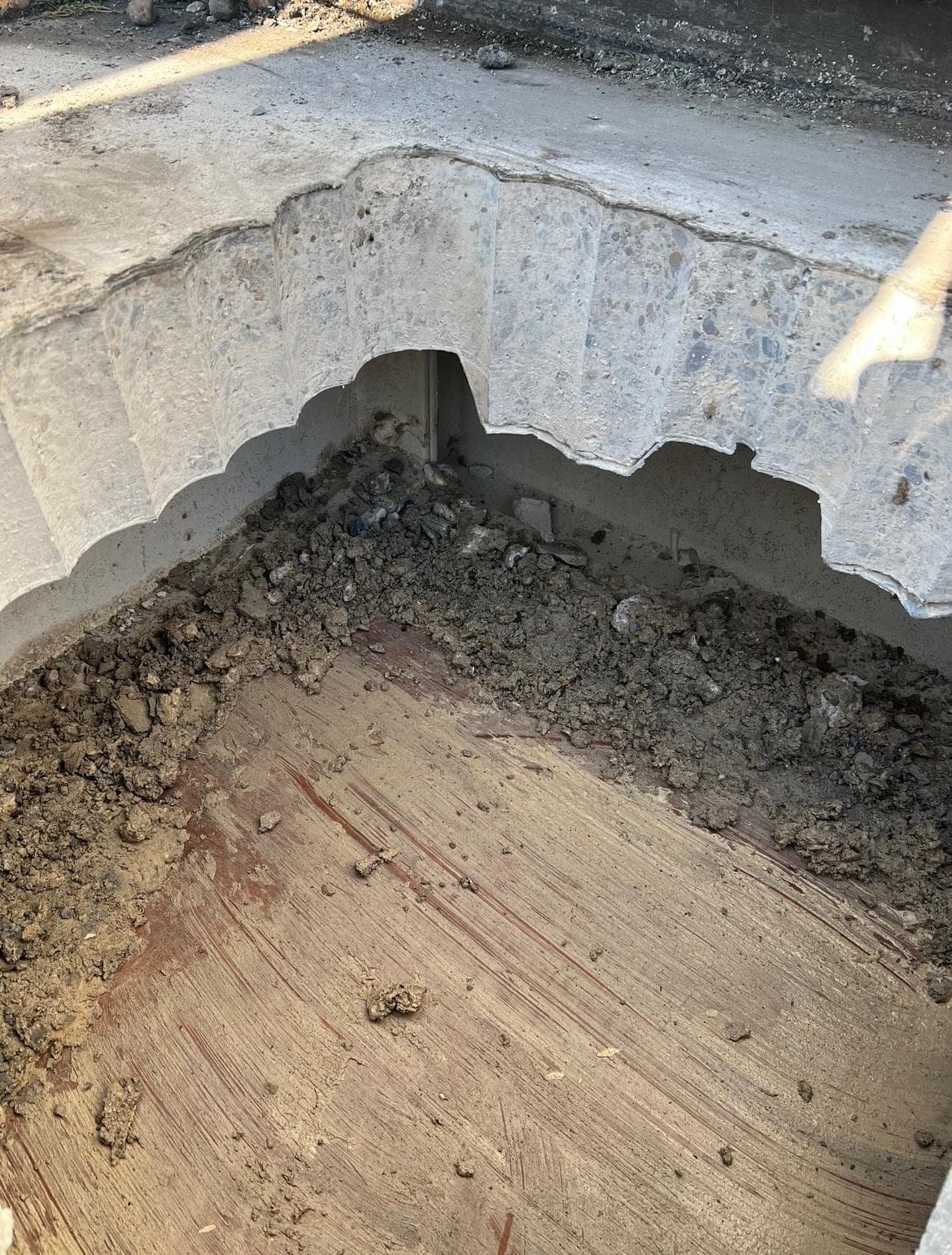
The edges of a stitch-drilled opening have a scalloped profile, left by the curve of each core. They run cleanly through the full depth of the slab, and can be made good afterwards if you need a flat face.
When you need it
Stitch drilling suits openings for risers, hatches, ductwork, larger drainage and new service routes. It’s particularly useful where a large saw can’t be used: tight plant rooms, roof areas, close to walls and upstands, or where the cut has to stop short of something. It also avoids breaking out the whole opening by hand, so there’s far less hammering and vibration.
Check the structure first
Openings in slabs and walls nearly always cut through reinforcement, so they normally need sign-off from a structural engineer, and sometimes temporary support or new steelwork around the opening. If an engineer is involved, include their drawing or details with your enquiry.
Applications & materials
Where stitch-drilled openings are used
Typical applications
- Risers and service shafts
- Access hatches
- Ductwork and ventilation
- Large pipe and drainage runs
- New cable and containment routes
- Roof-slab openings for plant and services
Materials
- Reinforced concrete slabs, including roof slabs
- Concrete floors in plant rooms
- Concrete walls
How we do it
Cutting the outline, then taking it out
Each core in the line is drilled in turn, with the rig moved along the outline so every core overlaps the one before and leaves no gaps. Like most diamond core drilling it’s normally done wet, so the slurry from every core has to be collected. On a long opening that adds up, and it’s picked up with a wet vac as the work goes.
Before the last cores are drilled, the section has to be held or supported so it can’t drop. What happens next depends on the job. A section that can be lifted is raised clear with lifting gear, as in our roof-slab photos. One that’s too heavy or awkward to lift in one go may be broken into pieces. Either way the cut concrete then has to be taken out of the building: in our photos, a removed section is on a wheeled bin.
Where the opening goes through to an occupied floor, the space below needs clearing and protecting from water and debris, the same as for single cores through a slab.
Before we price it
What we need from you
Openings take more planning than single holes. Send these through the quote form.
- The drawing or a sketch with the opening size and position
- Photos from above and below
- Slab or wall thickness, if you know it
- The engineer’s approval, and any temporary support or steelwork needed
- What’s below the opening, and whether we can get into that space
- How cut sections can be taken out: stairs, lift, a skip on site
- Whether there’s power and water near the work area
Good to know
Questions people ask
Is stitch drilling noisy?
Core drilling makes a steady grinding noise rather than the hammering of a breaker, and it’s quieter than breaking out a whole opening. If a section has to be broken up to get it out, that part is louder.
Will there be much vibration?
Much less than breaking out the whole opening, because the diamond bit grinds through rather than striking the concrete. It’s one reason stitch drilling is used near finishes, equipment and occupied areas.
Do the edges need finishing?
The edge has a scalloped profile from the overlapping cores. For most service openings that’s fine as it is; if you need a flat face, it can be made good afterwards.
Other services
More of what we drill
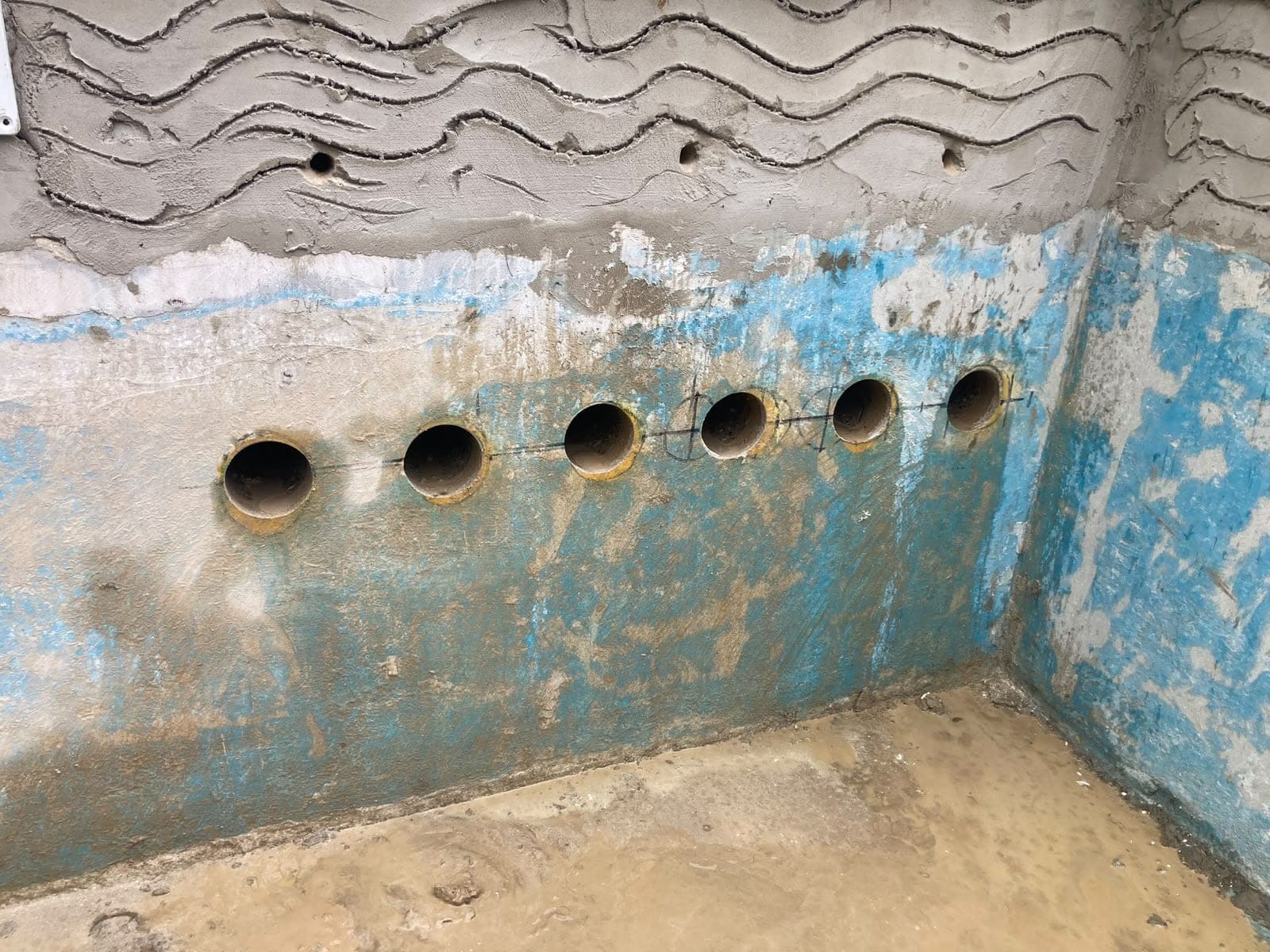
Wall core drilling
Holes through brick, block and concrete walls, including angled cores.
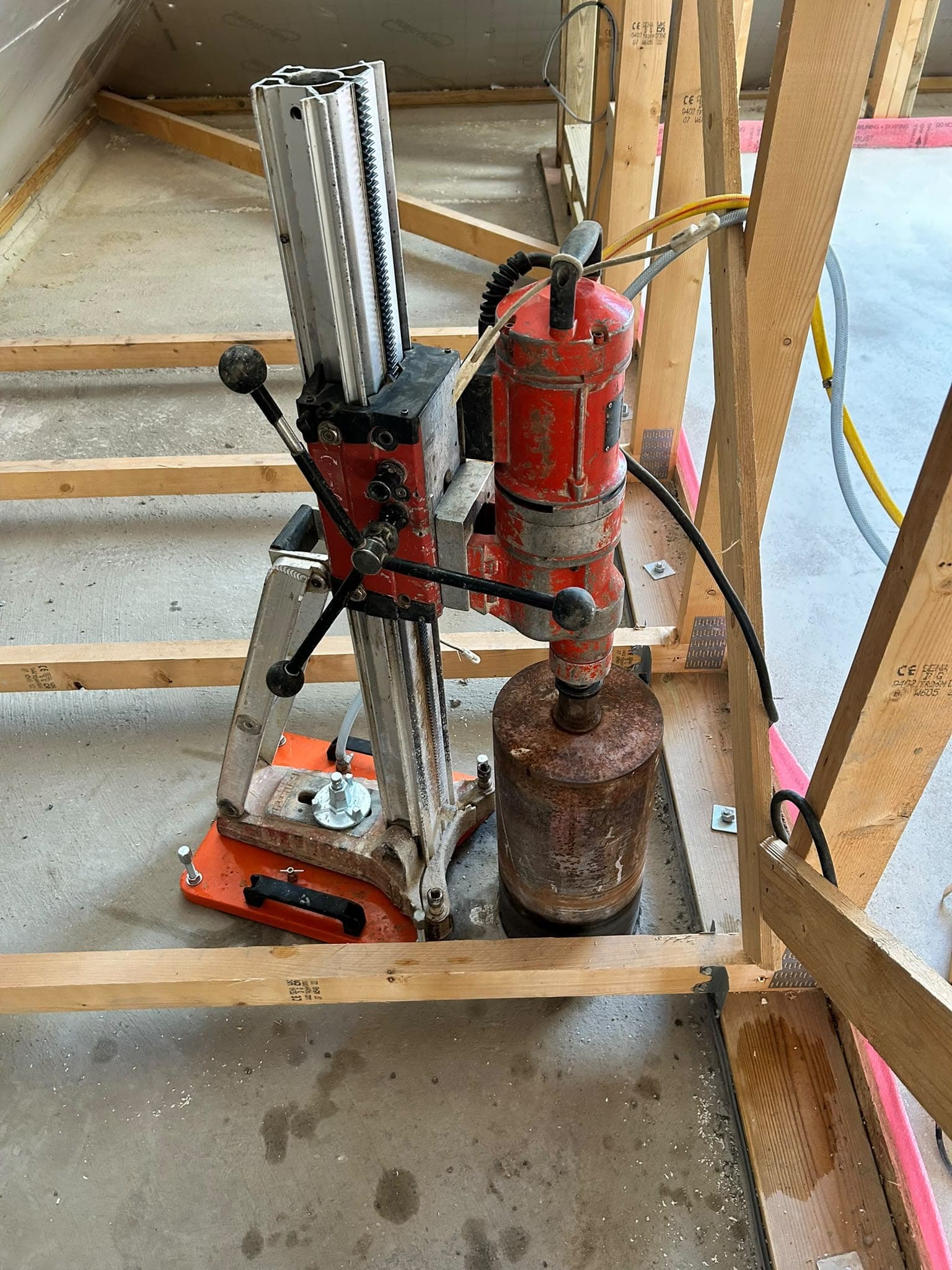
Floor & slab core drilling
Vertical cores through floors and slabs for pipes, risers and services.
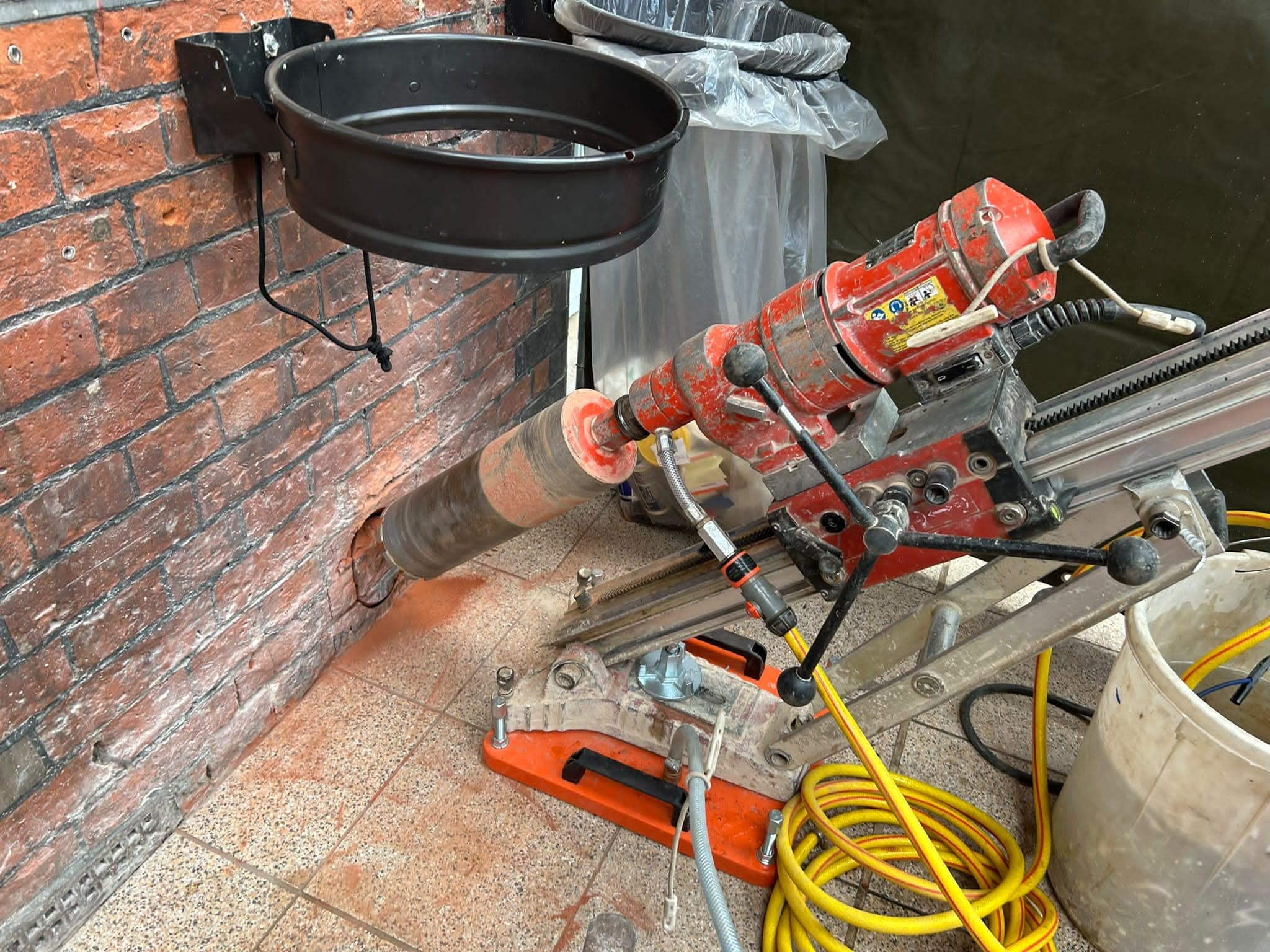
Vacuum-base drilling
Rigs held down by suction, so there are no fixings into finished floors.
Need an opening formed?
Send us the drawing or photos with the size and position. We’ll come back to you with a price.