
Diamond core drilling · Essex & London
Vacuum-Base Core Drilling
Core drilling on finished floors without drilling a fixing hole. The rig is held down by suction, so there’s no anchor hole to fill in your tiles or other finished surfaces.
What it is
A rig held down by suction
A core drill has to be held rigidly while it cuts. Usually that means fixing the rig’s base to the floor or wall with an anchor bolt, which leaves a hole to fill afterwards. A vacuum-base rig does the same job without a fixing: a pump draws the air out from under a sealed base plate, and the suction holds the rig firmly on the surface.
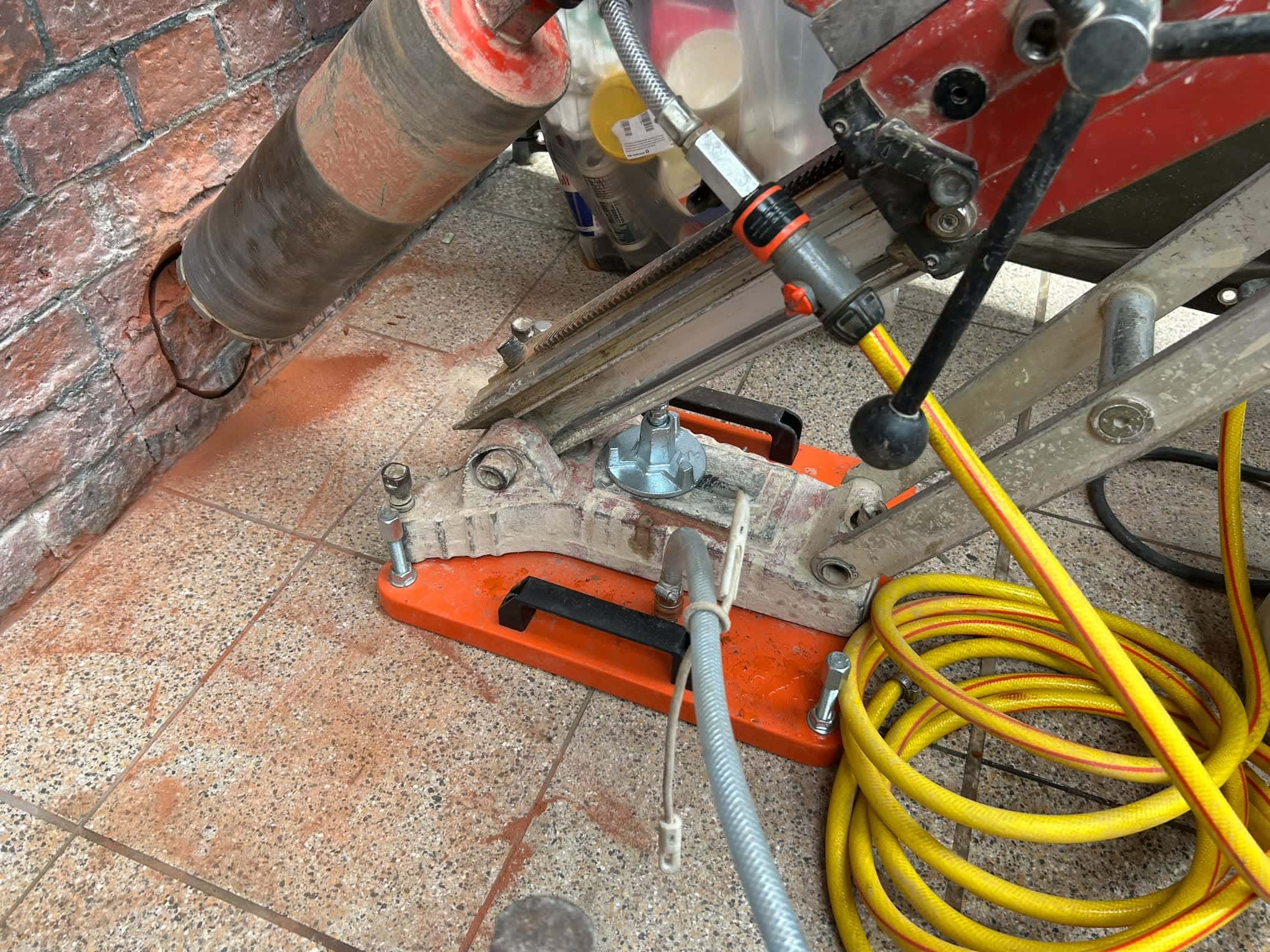
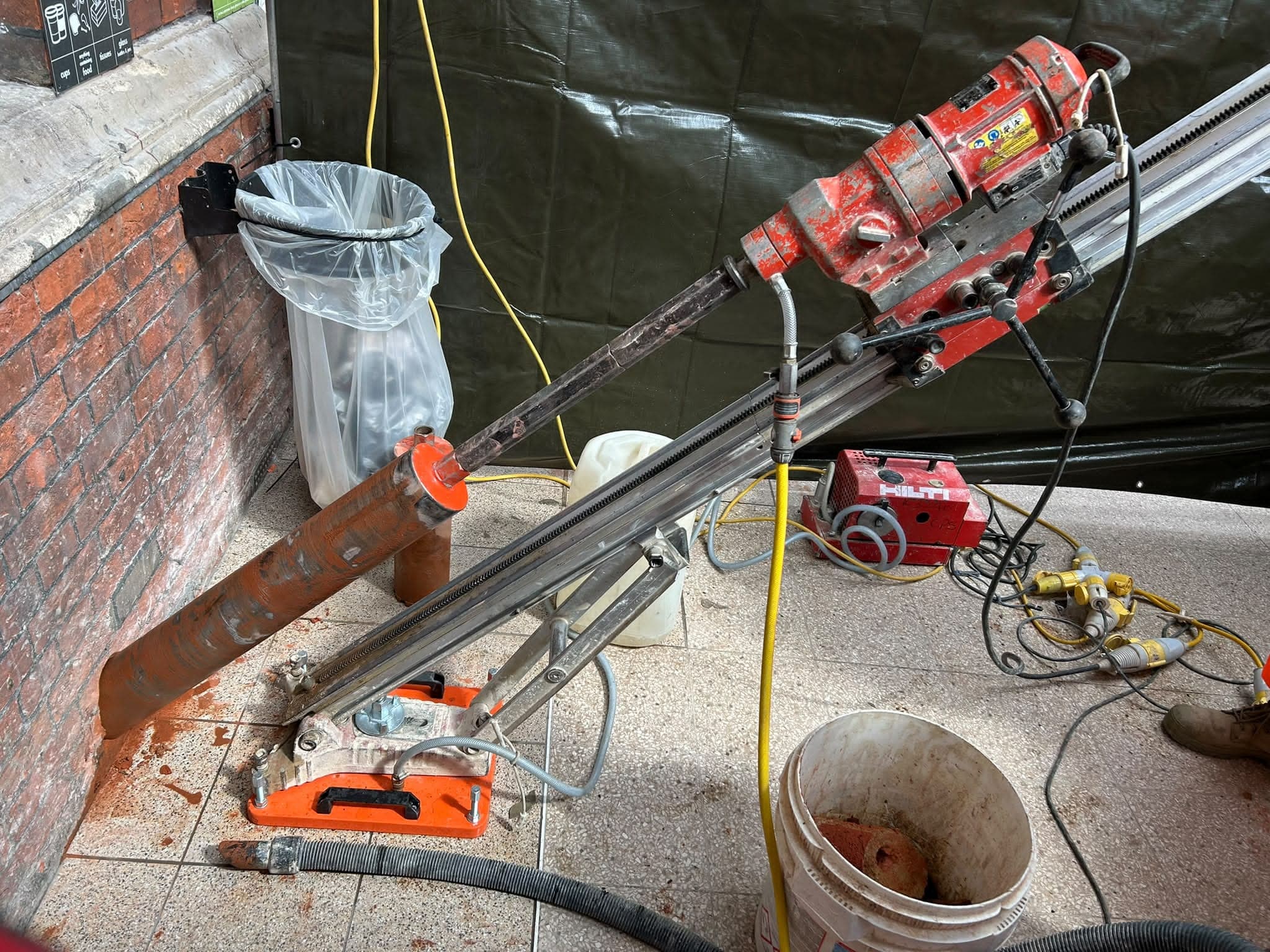
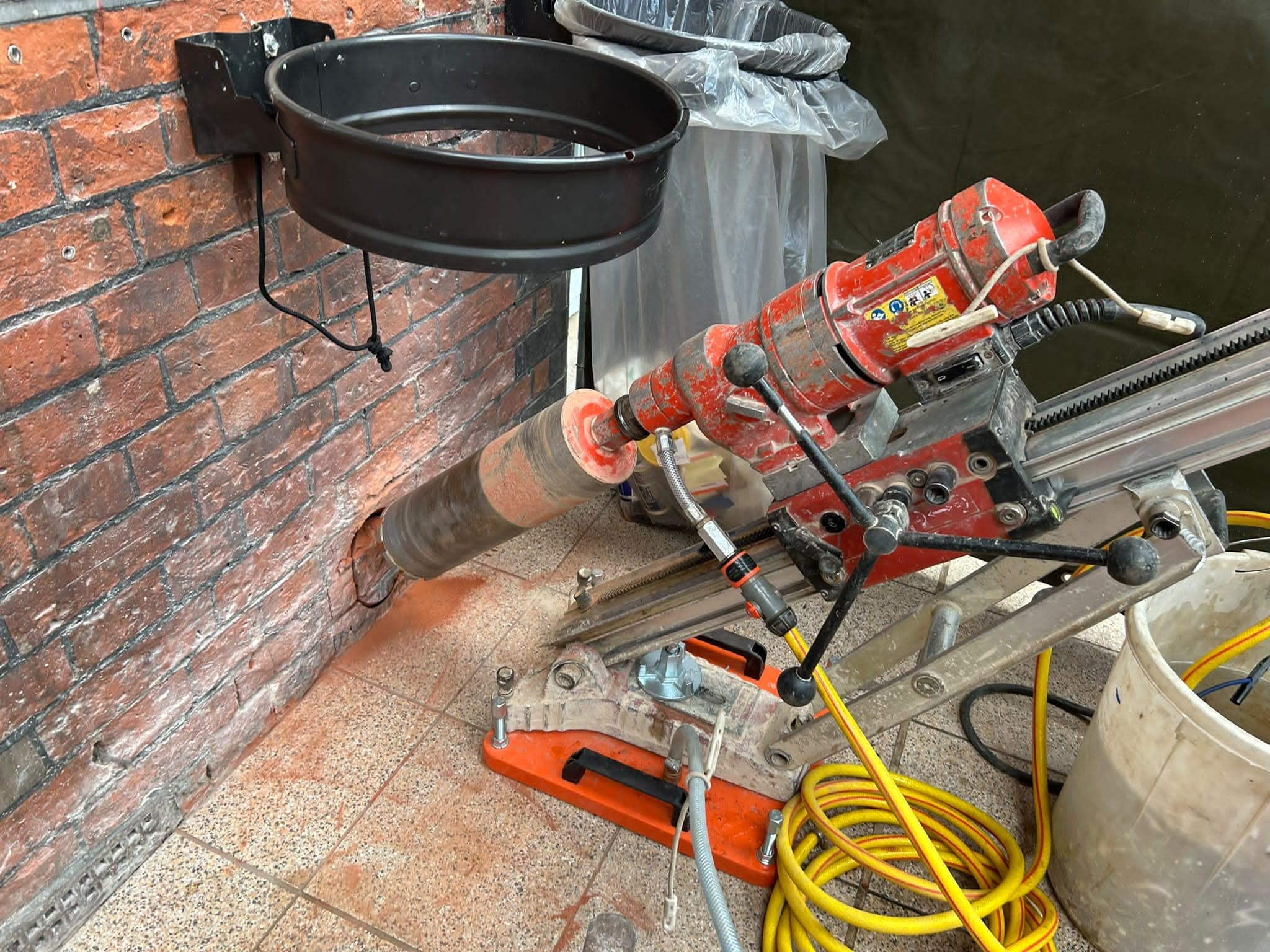
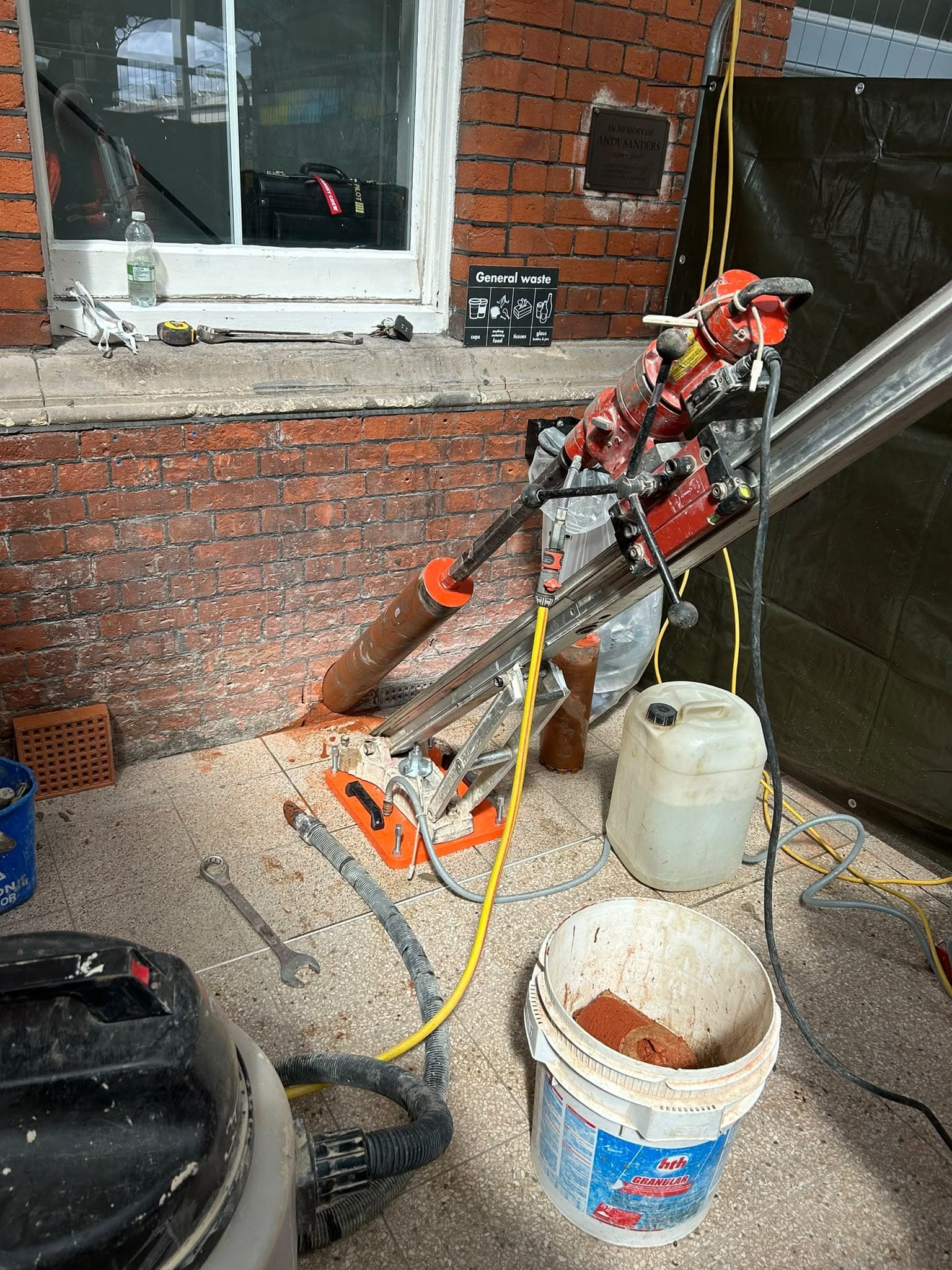
In our photos you can see the vacuum hose connected to the rig’s orange base plate, sitting directly on a tiled floor while the rig cuts an angled core through the brick wall beside it.
When you need it
Use a vacuum base when the floor is finished and has to stay that way: tiled kitchens and bathrooms, shop floors, offices, communal areas, or anywhere a fixing hole would show or could damage a waterproof layer or underfloor heating. With no anchor to drill and remove, the rig is also quick to move between holes, which helps when there are several cores in one area.
Suction needs a smooth, sound, reasonably flat surface to seal against. A very rough, cracked or loose surface may not hold, and then the rig has to be secured another way. Close-up photos of the floor help us tell.
It works for cores through walls, like the angled cores at floor level in our photos, and for vertical cores through floors and slabs.
Applications & materials
Where a vacuum base helps
Typical applications
- Angled cores through walls at floor level
- Extractor fan and soil pipe holes in finished kitchens and bathrooms
- Service penetrations in occupied commercial buildings
- Refurbishments where the floors are already laid
- Several cores close together in one room
Materials
- Drilling through brick, block and concrete
- Rig sitting on tiled floors, as in our photos
- Rig sitting on other smooth, sound finished surfaces
How we do it
Keeping finished floors finished
With the rig standing on a finished floor, water control matters even more. Diamond core drilling is usually done wet, and on the job in our photos the water and slurry were dealt with at source: a collector where the bit enters the wall, a wet vac to pick up water as it gathers, and buckets for the cores.
The vacuum pump runs for as long as the rig is in use, so the base stays held down for the whole cut. If the seal is disturbed, the drill shouldn’t run until the base is back down and holding.
Because nothing is fixed into the floor, there’s no anchor to drill, set and pull out, and nothing to fill once the rig is lifted away.
Before we price it
What we need from you
A vacuum base depends on the surface it sits on, so photos of the floor are as useful as photos of the hole. Send them through the quote form.
- A close-up photo of the floor where the rig will stand, so we can see the finish
- Photos of the wall or floor to be drilled, from both sides if possible
- Hole sizes, and the angle if it isn’t straight
- The floor finish, and anything under it such as underfloor heating
- Access, and whether the room will be in use while we work
- Whether there’s power and water near the work area
Good to know
Questions people ask
Will it leave holes in my tiles?
No fixings go into the floor: the base is held down by suction on a seal, so there are no anchor holes to fill. Tell us about delicate or freshly laid finishes so they can be protected.
Is it as steady as a bolted rig?
On a smooth, sound surface the suction holds the base firmly enough for core drilling. It relies on a good seal, which is why we ask for photos of the floor first.
Will it make much dust?
Diamond core drilling is usually done wet, which keeps dust down. The water and slurry are collected as the drilling goes, with a collector and a wet vac.
Other services
More of what we drill
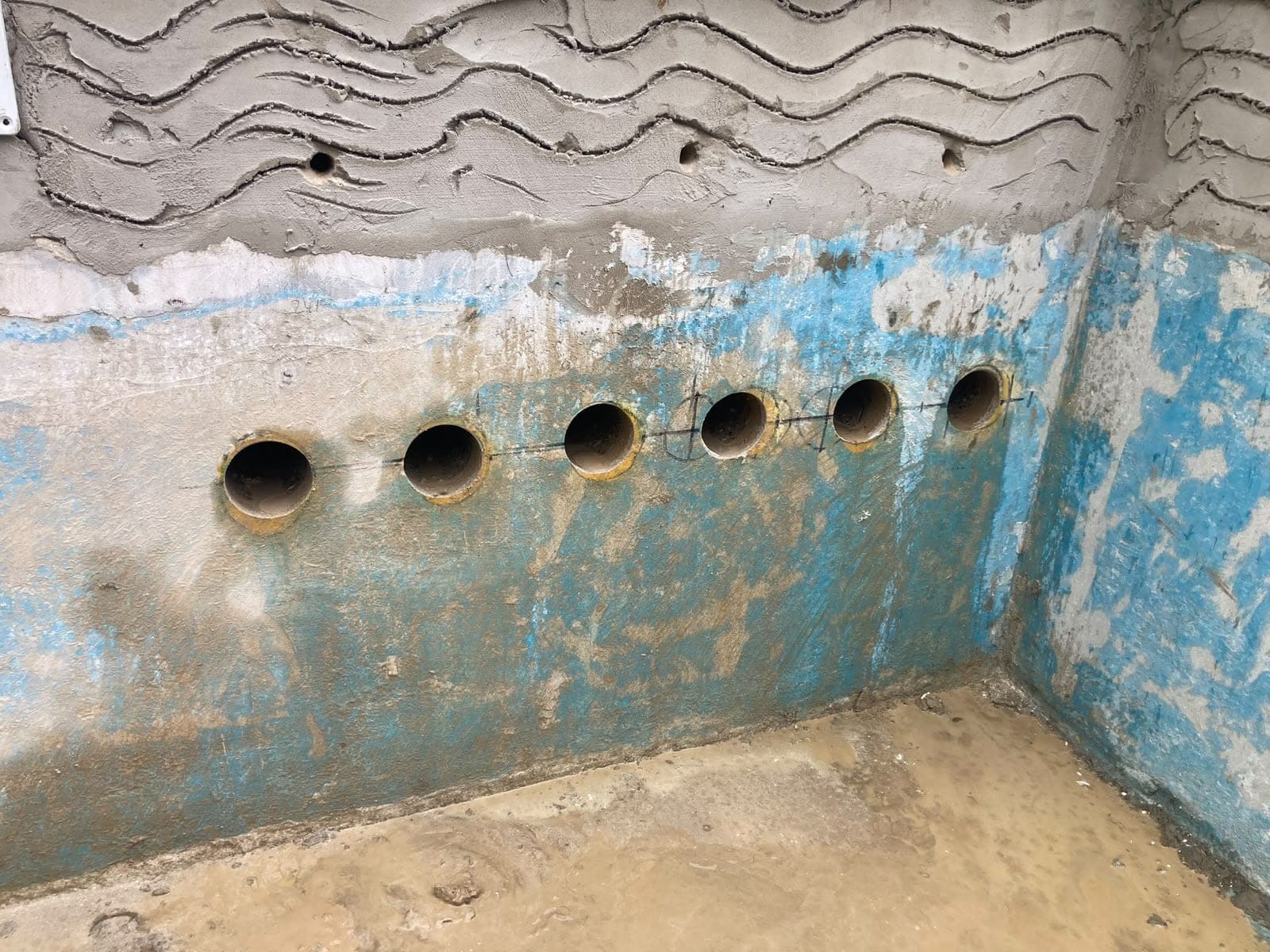
Wall core drilling
Holes through brick, block and concrete walls, including angled cores.
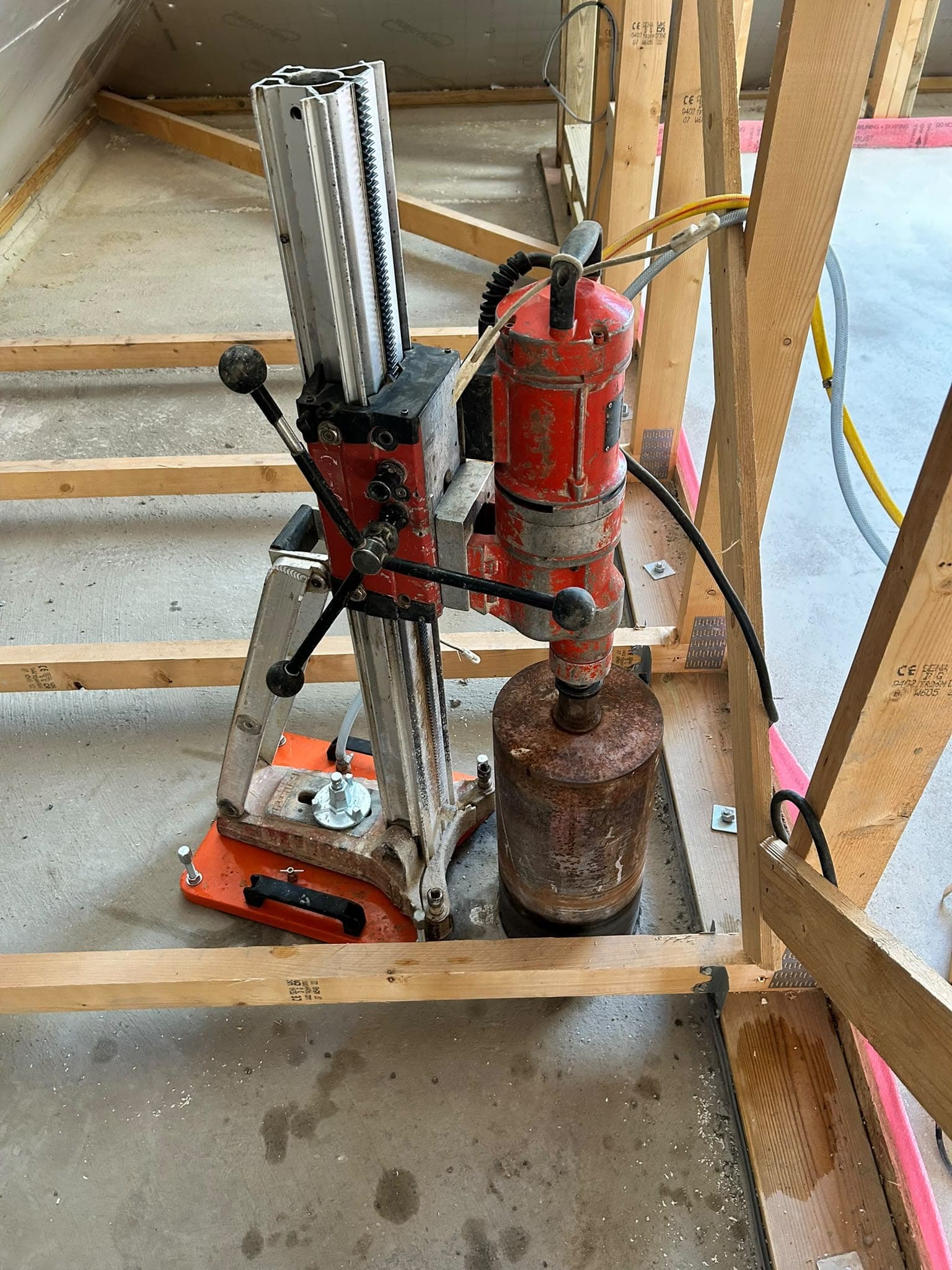
Floor & slab core drilling
Vertical cores through floors and slabs for pipes, risers and services.
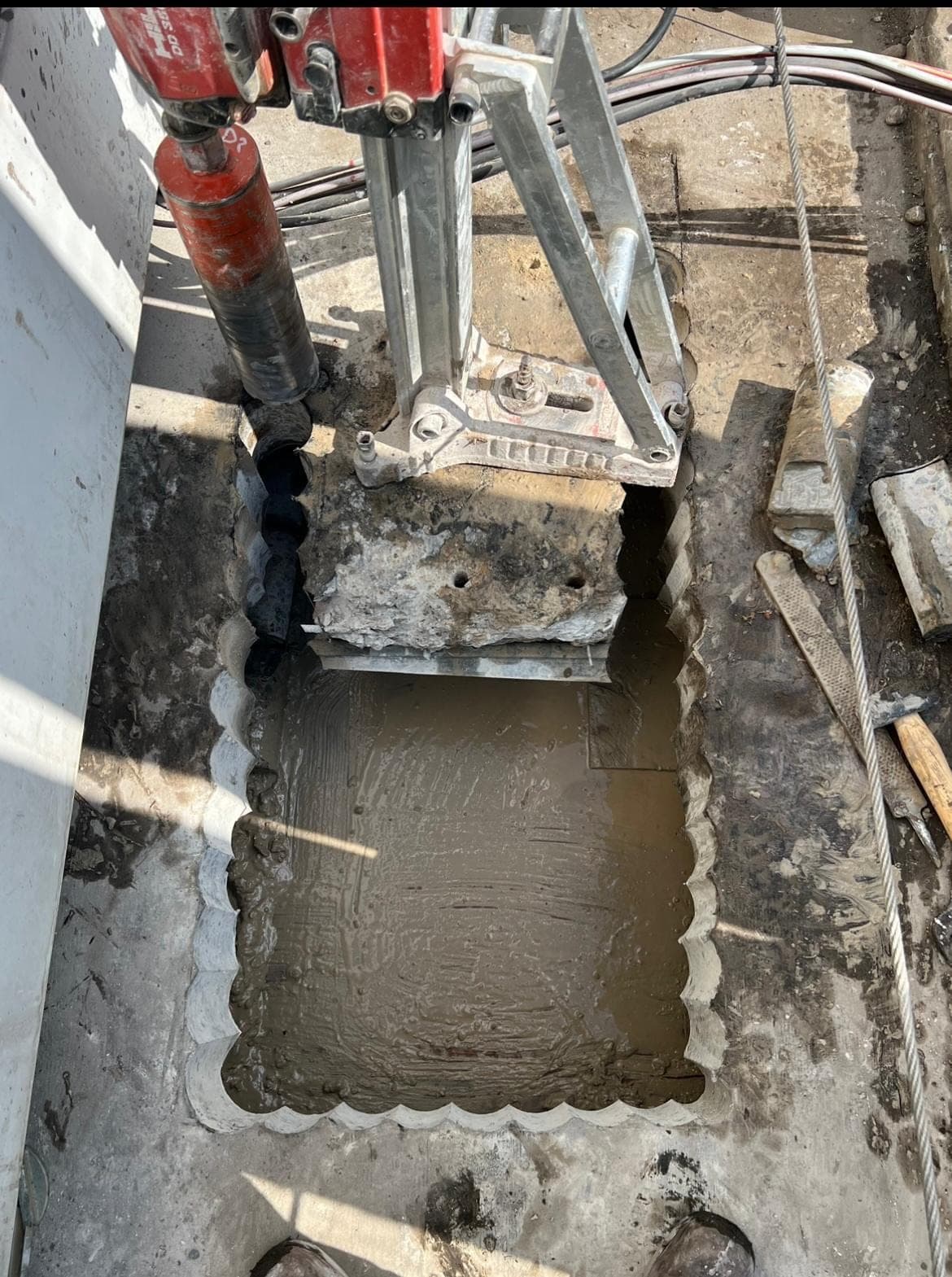
Openings by stitch drilling
Square and rectangular openings formed from a line of overlapping cores.
Drilling near a finished floor?
Send us photos of the floor and the wall or slab to be drilled. We’ll come back to you with a price.